


Cyber Security & Ethical Hacking Course
(Classroom + Offline Batches)
Learn from defence & law enforcement veterans
Hands-On Lab Training
12 Live Sessions + Capstone
Real Penetration Test

Google Rating
4.9
- For enquiries call: +91 9158 89 89 89
Book Your Free Investment Banking Demo!

Hands-On Lab Training
12 Live Sessions + Capstone

Real Penetration Test
- For enquiries call: +91 9158 89 89 89
What is Cyber Security and Ethical Hacking?
- Cybersecurity protects systems, networks, and data from digital attacks.
- Ethical hacking uses attacker techniques, legally, to find weaknesses first.
- This cybersecurity and ethical hacking course teaches both sides together.
- You build a real hacking lab and run a full penetration test by Day 12.
- Roles after this course span SOC analyst, pentester, and security engineer.
Key Cyber Security and Ethical Hacking Program Highlights
- 36 Hours of Live, Hands-On Training
- 12 Sessions, Networking to Defence
- Build Your Own Hacking Lab
- Attacker and Defender View
- Ethics Module Before Any Offensive Work
- Hands-on Experience with 10+ Tools
- Exploit Real Vulnerabilities
- Crack Passwords, Run MITM Attacks
- Full Capstone Pentest with Report
- Assignment After Every Session
- Mapped to Security+, CEH, OSCP
- Resume Help Around Your Capstone
- Internship & Placement Assistance
- Mock Interviews: Recon to Defence
- Troubleshooting Channel After the Course
10+ Cybersecurity Tools and Technologies You Will Master









Your Complete Cyber Security & Ethical Hacking Learning Hub
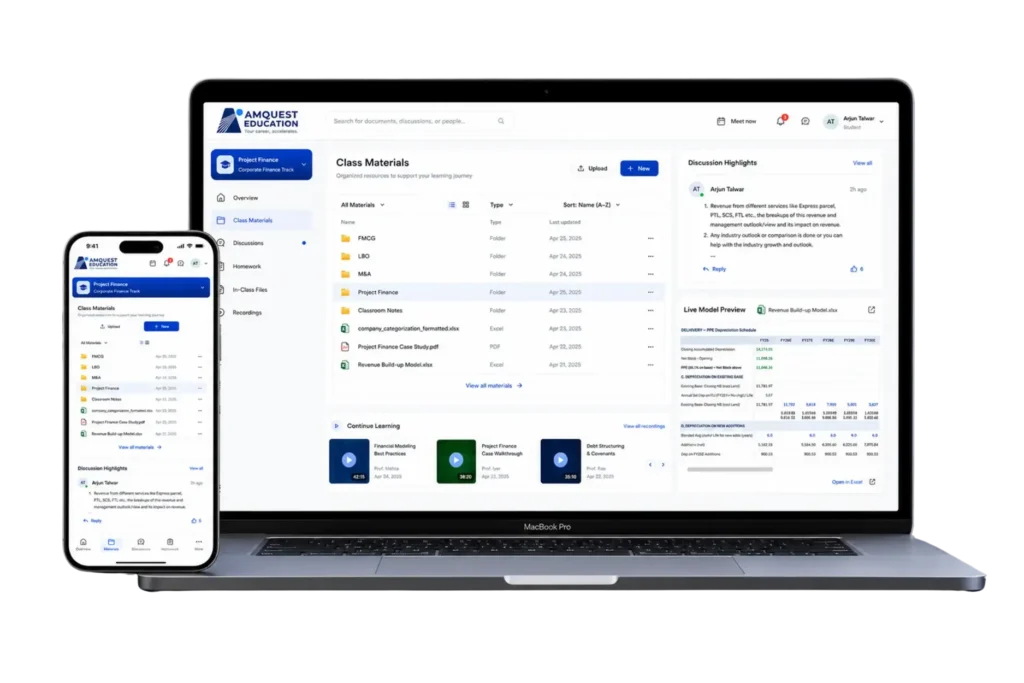
Everything from your lab setup guides to your assignment briefs lives in one place. Sessions are organised day by day, so you can pull up the Day 5 Nmap cheat-sheet or the Day 9 password-cracking notes without digging through old chats. Submit assignments, rewatch a recorded session if you missed a live class, or jump into the troubleshooting channel if your lab setup is acting up.
Syllabus for Cyber Security Course and Ethical Hacking Course

12
Sessions

50
Hours of Training

10+
Tools
Part 1 – Networking Foundations
Build the base everything else stands on: how networks work, how Linux runs the show, and the lab you’ll attack and defend for the next 12 days.
Day 1 – Cybersecurity Landscape & Lab Setup
Start by understanding the threat landscape and the rules of engagement, then build your own isolated hacking lab from scratch.
- CIA triad, threat actors, and the attack lifecycle
- Ethics and law: why authorisation is everything
- Build a working lab with Kali Linux and a vulnerable target
Assignment: Document your lab setup and explore five Kali tools.
Day 2 – Networking Fundamentals
You can’t secure or attack what you don’t understand, so this day is about how data actually moves across a network.
- OSI and TCP/IP models, IP addressing, ports
- TCP vs UDP and the three-way handshake
- Capture and read live packets in Wireshark
Assignment: Capture a browsing session and annotate the handshake.
Day 3 – Network Services & Protocols
DNS, HTTP, DHCP, ARP, the everyday services attackers love to abuse. You’ll see exactly how they work and where they break.
- DNS, DHCP, ARP, and HTTP/TLS in detail
- Spotting insecure, plaintext protocols
- Watching a password travel in plaintext over HTTP
Assignment:
Identify every protocol in a provided traffic capture and flag the insecure ones.
Day 4 – Linux & the Command Line for Security
The terminal is a security professional’s main tool. You get fluent in Linux and write your first automation script.
- Filesystem navigation, permissions, and processes
- Core security commands: grep, find, ps, netstat
- Writing a bash script for host discovery
Assignment: Automate a recon task with bash and fix a misconfigured permission set.
Part 2 – Ethical Hacking
This is the core of the course: the full attacker workflow, taught hands-on and legally, from first scan to first shell.
Day 5 – Reconnaissance & Footprinting
Every engagement starts with information gathering. You’ll learn passive OSINT and active scanning with Nmap.
- Passive vs active recon, and the legal line
- Nmap scan types and service/version detection
- Turning open ports into a structured findings table
Assignment: Produce a full recon report on your lab target.
Day 6 – Vulnerability Assessment
Find the weak spots before attackers do. You’ll run a real scanner, read the output, and prioritise by risk.
- CVE and CVSS scoring
- Running and configuring a vulnerability scanner
- Cutting false positives and ranking real risk
Assignment: Produce a vulnerability assessment with risk ratings and remediation steps.
Day 7 – Exploitation & Ethical Hacking
Turn a vulnerability into access, responsibly, inside your lab. You’ll meet Metasploit and get your first shell.
- Exploit vs payload vs listener
- Using the Metasploit Framework
- Basic post-exploitation enumeration
Assignment: Document a full exploit chain from recon to shell.
Day 8 – Web Application Security
Most real-world breaches happen on the web. You’ll learn the OWASP Top 10 by exploiting them hands-on with Burp Suite.
- How requests, sessions, and cookies work
- SQL injection and cross-site scripting (XSS)
- Intercepting and tampering with requests
Assignment: Exploit three OWASP Top 10 categories and write the fix for each.
Day 9 – Password Attacks & Cryptography
Passwords are the front door. You’ll learn how they’re stored, cracked, and properly defended.
- Hashing vs encryption vs encoding
- Cracking hashes with John the Ripper and Hashcat
- Why salting and slow hashes stop attackers
Assignment: Crack a set of hashes and write a password policy recommendation.
Day 10 – Wireless & Network Attacks
Sniffing, spoofing, and man-in-the-middle attacks that are between a victim and the network.
- Wi-Fi security: WEP vs WPA2 vs WPA3
- ARP spoofing and intercepting traffic in your lab
- Detecting and defending against MITM attacks
Assignment: Document your ARP-spoofing lab and list three defences against it.
Part 3 – Defence & Capstone
Flip to the defender’s seat, then bring everything together in one full engagement.
Day 11 – Defence, Hardening & Incident Response
Switch from attacker to defender. You’ll harden a system, watch the logs, and respond when something goes wrong.
- System hardening and defence-in-depth
- Firewalls, IDS/IPS, and basic SIEM views
- The incident-response lifecycle
Assignment: Apply a hardening checklist and write an incident report for a simulated breach.
Day 12 – Capstone: Full Penetration Test, Report & Career
Run a complete, ethical penetration test from scope to report, then map your next steps.
- Full engagement: recon, scan, exploit
- Writing a professional pentest report
- Certifications and career paths: Security+, CEH, OSCP
Assignment: Submit a professional pentest report with a 10-minute findings presentation.
Don't Miss Scholarships!
First 50 Students Get Scholarship OFF! Talk to Our Course Counsellor
Benefits of Choosing the Amquest Cyber Security Course and Ethical Hacking Course
Topics covered in this cybersecurity and ethical hacking course
The course covers networking fundamentals, Linux, reconnaissance, vulnerability assessment, exploitation, web application security, password attacks, wireless attacks, and defence and incident response. You can join the classroom batch in Mumbai or attend live online from anywhere in India.
Who is ideal for this cybersecurity and ethical hacking course?
This course is built for beginners with no prior IT background, students wanting to break into security, and working professionals looking to move into a SOC, pentesting, or security engineering role. No coding or networking experience is required to start.
Career opportunities after this ethical hacking course
After completing the course, you can move into roles like SOC analyst, penetration tester, security analyst, cybersecurity engineer, or incident response analyst. These roles span IT services, banks, product companies, and security consulting firms.
Salary after the cybersecurity and ethical hacking course
Salaries after this course typically start between ₹4 and ₹8 LPA for SOC and analyst roles, and go up to ₹15 to ₹25 LPA for penetration testers and security consultants with a few years of experience. Senior roles like security architect can cross ₹30 LPA.
Who hires cybersecurity and ethical hacking professionals?
Graduates get hired by IT services firms, banks, fintech companies, product companies, government security agencies, and dedicated cybersecurity consulting firms. Demand spans every industry that runs digital infrastructure.
Eligibility for this cybersecurity and ethical hacking course
Anyone with basic computer literacy can join, regardless of degree or stream. No prior IT, networking, or coding background is required since the course builds everything from the ground up, starting with the basics in Week 1.
Learn Through Live Projects in Cyber Security Course and Ethical Hacking Course
This cybersecurity and ethical hacking course is built around doing the work, not watching it. You will:
Build an isolated hacking lab
Capture and analyse live network traffic
Run Nmap scans against a target
Exploit OWASP Top 10 vulnerabilities with Burp Suite
Crack password hashes with John the Ripper and Hashcat
Run a man-in-the-middle attack in your lab
Close with a full pentest and client-style report
Skills You'll Learn in This Cybersecurity and Ethical Hacking Course
- Networking fundamentals across the OSI and TCP/IP models
- Linux command line use and basic bash scripting
- Reconnaissance, OSINT, and footprinting
- Vulnerability scanning and CVSS-based risk scoring
- Exploitation using the Metasploit Framework
- Web application security across the OWASP Top 10
- Password cracking, hashing, and cryptography basics
- Wireless and man-in-the-middle attack techniques
- System hardening, firewalls, and incident response
- Writing a professional penetration test report



Highlights of Our Cyber Security & Ethical Hacking Course
- Guided labs: Live instructor-led sessions plus a shared troubleshooting channel for all 12 days
- Built-in practice: Every session ends in an assignment that feeds directly into your capstone
- Structured resources: Tool cheat-sheets, command references, and a clear day-by-day roadmap
- Career support: Resume guidance, a certification roadmap, and a portfolio-ready capstone report

Amquest vs Others
Amquest
Other
Lab Time
80% hands-on every session
Mostly lecture-based
Capstone
Full pentest with a professional report
Often, a quiz or short project
Perspective
Attacker (Red Team) and defender (Blue Team), on every topic
Usually offence-only or defence-only
Ethics Training
Dedicated module before any offensive work
Often skipped or covered briefly
Certification Mapping
Aligned to Security+, CEH, OSCP
Rarely mapped to real certification paths
Output
A pentest report you can show employers
Certificate only, no deliverable
Amquest Alumni Work Here, You Could Too







Specialisations Inside This Cyber Security & Ethical Hacking Certification Course
Cyber Security: Learn to protect systems, networks and data from real-world threats.
Ethical Hacking: Learn to find vulnerabilities like attackers but legally & with authorisation
Career Opportunities After the Cyber Security and Ethical Hacking Course
SOC
Analyst
₹4 – ₹8 LPA
Penetration
Tester
₹6 – ₹15 LPA
Security
Analyst
₹5 – ₹12 LPA
Cybersecurity
Engineer
₹8 – ₹18 LPA
Network Security
Engineer
₹6 – ₹14 LPA
Ethical
Hacker
₹5 – ₹20 LPA
Information
Security Analyst
₹6 – ₹15 LPA
Security
Consultant
₹10 – ₹25 LPA
Incident Response
Analyst
₹6 – ₹16 LPA
Security
Architect / CISO
₹30 – ₹60+ LPA
Trusted by Learners From India’s Leading Institutions











ROI of a Cyber Security & Ethical Hacking Course in India


No Cost EMIs: Pay in 2 instalments (₹20K + ₹15K)
Our cybersecurity and ethical hacking course is designed to help you target an average starting salary of ₹4 to ₹6 LPA. With the right certifications and hands-on experience, you can even scale up to ₹25 LPA and beyond.
What Our Students Say
Career & Placements Assistance

Amquest Placement
Program
- Super Sessions with Industry Leaders
- Resume & Personal Branding
- Technical & Case Interview Training
- End-to-End Support Until Offer Letter
6 Guaranteed Interviews
Lifetime Access Job Portal
FAQs on the Cybersecurity and Ethical Hacking Course
What is the difference between cybersecurity and ethical hacking?
Graduates and final-year students from any stream can join. Commerce, finance, engineering, science, all are eligible to enrol in our IB course.
Can I do this cybersecurity course online?
Yes. The entire program runs live online and offline with hands-on virtual labs, so this is genuinely one of the cybersecurity courses online that still includes real lab work.
What is the duration of the cybersecurity and ethical hacking course?
The course runs for 6 weeks across 12 live sessions of 3 hours each, + a Capstone project of 14 hours, totalling 50 hours.
Is this course suitable for beginners with no IT background?
Yes. This cybersecurity and ethical hacking course assumes no prior IT background and builds networking and Linux skills from day one.
What tools will I learn in this ethical hacking course?
What certifications will I receive after completing the course?
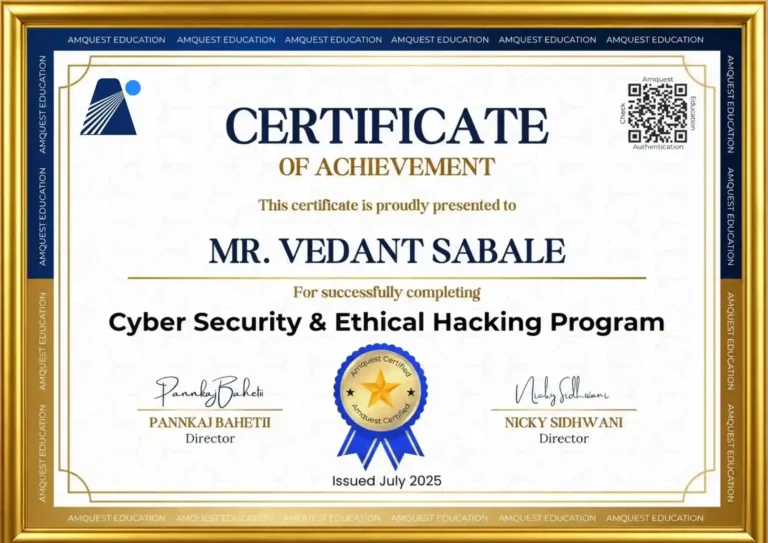
You receive an Amquest completion certificate, a cybersecurity ethical hacking completion certificate, and a portfolio-ready capstone report, with training mapped to Security+, CEH, and OSCP objectives.
What is the salary of an ethical hacker in India?
Most ethical hackers in India earn somewhere between ₹4 LPA and ₹25 LPA. Where you land depends a lot on your certifications and how much hands-on experience you bring.
What career opportunities are available after the course?
You can move into roles like SOC analyst, penetration tester, security analyst, or cybersecurity engineer.
Is ethical hacking legal in India?
It’s legal if you have permission to test the system. Without that, it’s just hacking, and that’s a crime regardless of intent.
What is the scope of cybersecurity and ethical hacking in India in 2026?
There’s a real shortage of trained people in this field, and the number of cyberattacks keeps going up. So yes, the demand is there for anyone willing to put in the work.