
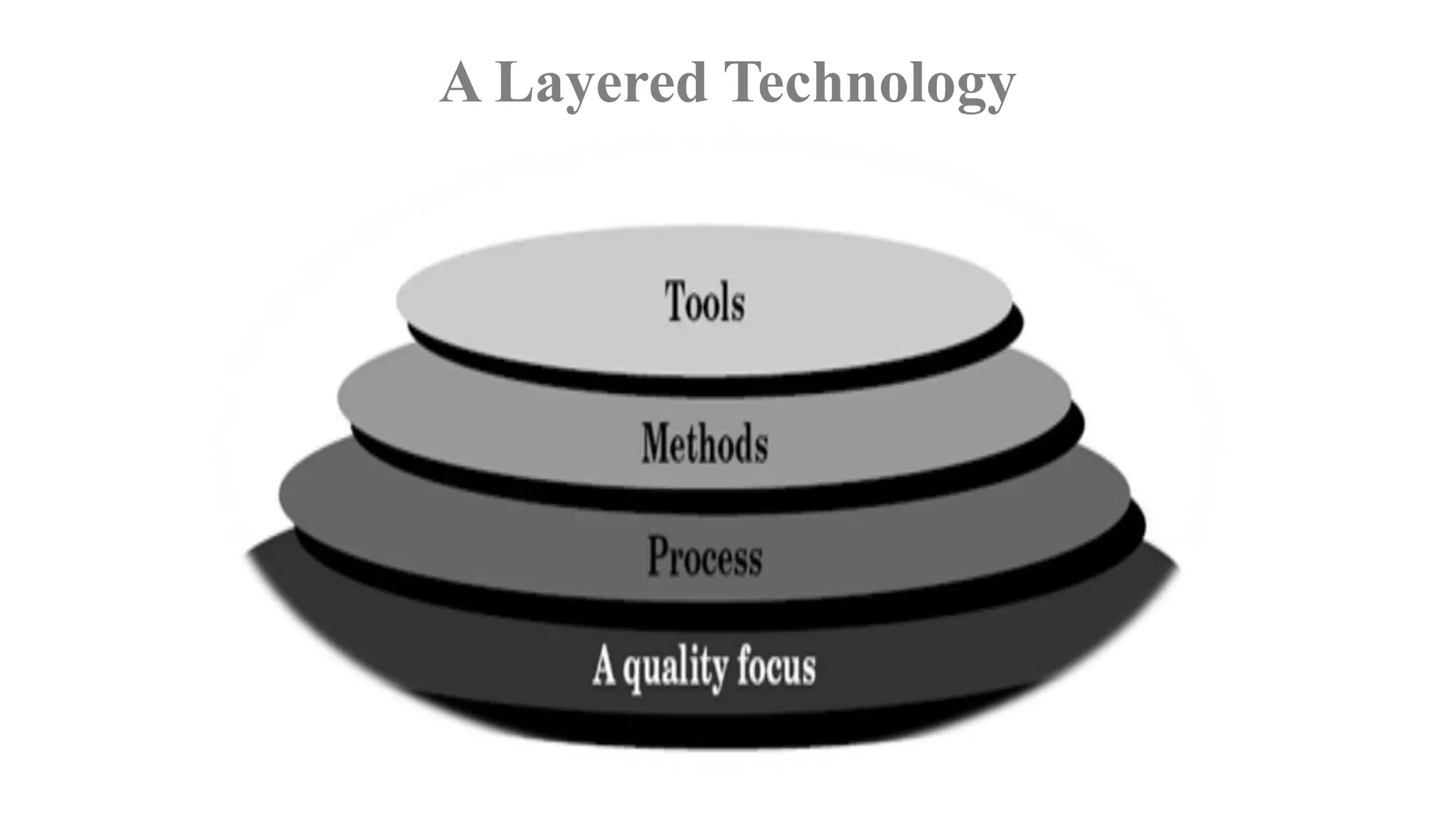
Layered technology in software engineering is the most pragmatic way to design systems that remain understandable, testable, and resilient as they scale. When teams get layering right they reduce accidental complexity, speed feature delivery, and limit blast radius when things fail. This article explains why the approach evolved, how modern toolchains and AI change the game, concrete design and operational tactics you can apply today, and a short case study plus a migration playbook.
You will also find a practical checklist you can use to evaluate one service in a week and a short note about Amquest Education‘s hands on program that helps engineers build these skills in production settings.
Why layering emerged and how it evolved
Historically, early enterprise applications mixed UI code, business rules and database access in the same modules. The result was fragile systems that were hard to test, hard to change and hard to scale. Layered technology in software engineering emerged to restore separation of concerns: the presentation layer handles user interaction, the business logic layer enforces domain rules, and the data access layer maps persistable state. That classical n tier architecture in software engineering informed later refinements such as clean architecture principles and domain driven design.
The move from monolith to distributed systems kept the value of internal layers while adding service boundaries. Today many teams combine layered designs inside services with service oriented boundaries between them to achieve modular software design and runtime scalability in software systems.
Tooling and trends influencing layered design in 2026
Frameworks and libraries remain central to enforcing layer boundaries. Modern server frameworks encourage a controller, service, repository split while front end libraries enforce component boundaries in the presentation layer. ORMs and query builders speed data access layer implementation, and schema registries, distributed tracing and contract testing make layer interactions visible and safer.
Three trends that matter now
- AI augmented design: Generative models can propose API schemas and unit tests for a business logic layer, accelerating pattern adoption while preserving separation of concerns.
- Agentic AI for automation: Agents can update API contracts, refactor call sites, or generate contract tests across layers while human engineers review.
- Security and zero trust: Security is now a cross cutting concern enforced at each layer rather than an afterthought.
Design tactics you can apply today
1) Define explicit layer contracts
Use OpenAPI or Protobuf to codify presentation to business logic boundaries. Source a simple contract in your repo.
Example minimal OpenAPI pattern: a single operation per endpoint with request and response schemas assigned to domain types. Keep contracts minimal and version them.
2) Keep the business logic layer pure
- Place domain rules in domain entities and domain services rather than controller code.
- Prefer deterministic, side effect free functions where possible; isolate infrastructure calls behind interfaces in the data access layer.
3) Anti corruption layers for integrations
When you integrate legacy systems, do not let their models pollute your domain. Add a translation layer that maps external DTOs into your domain entities and back. Implement adapters that are thoroughly tested with contract tests to prevent regressions.
4) Incremental decomposition checklist
- Deliver vertical slices end to end to keep feedback tight.
- When a pattern repeats, extract the shared logic into a domain library or the business logic layer.
- Extract services only when coupling, scalability in software systems, or independent deployment is required.
Operational tactics and governance
Observability by layer: Tag traces and metrics with layer metadata so you can attribute latency to the presentation layer, business logic layer, or data access layer.
Contract governance: Assign ownership for each contract. Tag contracts with semantic version numbers and require consumer driven contract tests on CI.
Tests by layer: Organize test suites so the business logic layer has focused unit tests, the presentation layer has shallow integration tests, and the data access layer has small integration tests using test fixtures or in memory databases when appropriate.
Measurement that ties architecture to outcomes
Track these metrics to evaluate whether layered technology in software engineering is improving delivery and resilience:
- Mean time to change: how quickly teams implement new business features without cross layer regressions.
- Layer fault isolation rate: percent of incidents contained to a single layer.
- Test coverage by layer: prioritize business logic layer coverage.
- Deployment frequency and rollback rate: frequent safe deploys indicate healthy decoupling.
Operational dashboards should show latency and error rate per layer via distributed tracing. Also monitor coupling metrics such as service dependency graphs and change coupling to guide when to extract a layer into a service.
Practical anti patterns and how to avoid them
- Logic leakage: business rules in the data access layer lead to subtle bugs and fragile migrations. Use static analysis and code reviews to detect domain logic in repository code.
- Over abstraction: anemic domain models and excessive indirection increase cognitive load. Let abstraction follow usage, not the other way around.
- Unversioned contracts: changing request or response shapes without versioning breaks consumers. Use lightweight semantic versioning for contracts.
Short case study: modularization at scale
A global streaming platform moved from a monolith to service oriented deployments while keeping layered design inside services. They enforced presentation contracts using gateways and standardized internal API patterns. Observability added layer tagging to traces and dashboards.
The combined effect was faster onboarding for new teams, lower incident blast radius, and shorter mean time to change for feature work. The technical lessons: enforce layer contracts early, automate contract tests, and instrument layer level telemetry to guide decomposition.
Migration playbook: 6 week vertical slice approach
- Week 1: Inventory the selected service. Map responsibilities across the presentation layer, business logic layer, and data access layer.
- Week 2: Draft contracts for the chosen endpoints. Add lightweight OpenAPI files and stub implementations.
- Week 3: Implement the vertical slice using the new contracts, keeping business rules in the business logic layer.
- Week 4: Add unit tests for domain logic and contract tests for the new interfaces. Run in CI.
- Week 5: Replace the legacy route with the new implementation using the strangler pattern. Monitor for regressions with layer tagged traces.
- Week 6: Measure lead time, layer fault isolation, and rollback rates. Iterate based on data and expand to the next slice.
Student outcomes and practical learning
Engineers who learn by doing move faster. Hands on programs that combine AI augmented labs, project based internships and mentor feedback help learners apply layered principles to production code. One recent learner from Mumbai completed an internship building a microservice with a well defined business logic layer, contract tests, and observability instrumentation. That project became a portfolio highlight and led to a production role.
Why this matters for teams and for you
Layered technology in software engineering is not just a design pattern. It is a practical discipline that reduces cognitive load, enables safer change, and helps teams split responsibilities without fragmenting ownership. When combined with contract governance, observability and a sensible decomposition plan, layered approaches produce measurable improvements in throughput and resilience.
About training and applying these skills
For engineers who want structured, practical training that ties layered theory to industry projects, Amquest Education runs hands on courses that combine generative AI labs, agentic automation exercises, and internships with industry partners. Their cohorts in Mumbai and online focus on modular software design, clean architecture principles and measurable project outcomes. Learn more at https://amquesteducation.com/courses/software-engineering-generative-ai-and-agentic-ai/.
Actionable checklist: start this week
- Draw a layer diagram for one service and label owners (presentation, business logic layer, data access layer).
- Create one OpenAPI contract for a single endpoint and add a minimal consumer contract test.
- Write three unit tests that cover your business logic layer edge cases.
- Tag traces with layer metadata and add a dashboard that surfaces latency by layer.
- Use the strangler pattern to route one feature to the new implementation.
FAQs
Q: What is layered architecture in software engineering and when should I use it?
Layered architecture in software engineering partitions code into presentation layer, business logic layer, and data access layer responsibilities. Use it to reduce coupling, improve testability and make changes safer. Combine it with service boundaries where deployment independence or scalability in software systems is required.
Q: How does layered technology in software engineering relate to microservices?
Layered technology in software engineering defines internal structure inside a service. Microservices define runtime and deployment boundaries. Use layered patterns within each service to keep code maintainable as you scale.
Q: What is the difference between layered technology architecture and multi tier architecture?
Layered technology architecture emphasizes logical separation inside code. Multi tier architecture (or multi tier architecture style) often refers to physical or deployment tiers such as browser, application server, and database. The conventions overlap but differ in focus.
Q: Are there common mistakes when adopting a software engineering layered model?
Yes. The biggest mistakes are leaking business rules into the data access layer, over abstracting, and failing to version contracts. Enforce separation through tests, code review, and automated contract checks.
Q: What is n tier architecture in software engineering?
N tier architecture in software engineering is a classical model that splits an application into multiple logical layers or tiers. It is the conceptual ancestor of many layered approaches used today.
Conclusion
Layered technology in software engineering remains a core discipline for teams that want maintainable, testable and scalable systems. The combination of explicit contracts, a clean business logic layer, disciplined data access layer patterns and layer aware observability yields measurable improvements in delivery velocity and resilience.
Start with a single vertical slice, enforce a contract first discipline, and measure outcomes. If you want guided, hands on training that combines modern AI augmented labs with internships and industry mentorship, consider the practical cohorts offered by Amquest Education to accelerate your path from theory to production.